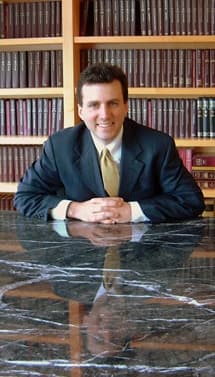
Shanin Specter
About Shanin Specter
Shanin Specter has obtained more than 300 jury verdicts or settlements exceeding $1 million and over 75 case resolutions greater than $10 million, including 19 verdicts. His most notable verdicts include $153 million against a major automaker and $109 million against an electric power company. His legal victories have transformed industries and established precedents in medical malpractice, defective products, medical devices, premises liability, motor vehicle accidents, and general negligence. In May 2026, Specter teamed with Elizabeth Crawford to secure a $49.5 million verdict in federal court in Chicago against Boeing on behalf of one of the 157 victims from the Ethiopian Airlines 302 MAX8 crash. With prejudgment interest, the total recovery reached $63.96 million, which Boeing paid. They had previously won the first verdict in November 2025 for $28.45 million, totaling $35.85 million with prejudgment interest that Boeing agreed to pay. Specter waged an epic battle against Ford Motor Company on behalf of the family of Walter White, a three-year-old killed when the parking brake in his father's F-350 spontaneously disengaged. Specter won two verdicts in White v. Ford: $153 million and $52 million. His efforts were chronicled in the book Bad Brake. He obtained a $109 million jury verdict for the family of Carrie Goretzka, who was killed by a fallen electric line. This represents the largest contested liability personal injury verdict in Pennsylvania history; the case settled for $105 million, also a Pennsylvania record. These cases, along with others, earned Specter designation as Philadelphia Product Liability Lawyer of the Year 2016 by Best Lawyers in America. Beyond monetary compensation, many of Specter's cases have prompted societal changes, including improvements to vehicle safety, nursing and hospital procedures, police car operation safety, CPR training at public institutions, and utility power line inspections and maintenance. The Goretzka case prompted the Pennsylvania Public Utility Commission to establish a new Electric Safety Division to investigate reported electrical injuries. His fire escape collapse lawsuit helped move Philadelphia to enact an ordinance requiring regular independent structural engineer inspections of all fire escapes. Specter earned his law degree from the University of Pennsylvania and an LL.M. with First Honors from Cambridge University. He is a member of the Inner Circle of Advocates, comprising the best 100 trial lawyers in the country, and a member of the prestigious American Law Institute. Super Lawyers magazine featured him on its cover, calling him one of the most celebrated and respected catastrophic injury litigators in the nation. He received the Michael A. Musmanno Award, the highest honor conferred by the Philadelphia Trial Lawyers Association. He also received the Milton D. Rosenberg Award, the top honor from the Pennsylvania Association for Justice, recognizing "leadership, service and devotion to the Association's cause." The National Law Journal selected Specter as one of the top ten litigators in Pennsylvania. In 2016, he won The Legal Intelligencer's Lifetime Achievement Award. In 1995, six months after opening the firm with partner Tom Kline, Specter won a $24.25 million jury verdict for a young girl severely brain damaged in a swimming pool accident, Weightman v. National Realty Corp. At that time, it was the largest compensatory damage verdict ever awarded in Pennsylvania. In 1997, in Sparber v. DuPont, he won a Delaware-record $19.9 million verdict against a hospital after a 15-year-old patient was assaulted by a visitor, resulting in catastrophic nerve damage. In 1998, Specter won a $6.8 million verdict for a man injured in a motorcycle accident while wearing a defective helmet, Wandel v. Bell Sports, Inc. Known for his tenacity and meticulous attention to detail, Specter has set records in medical malpractice cases. In 2000, he won the then-largest medical malpractice verdict in Pennsylvania history for David Caruso, a 20-year-old left in a near-vegetative state after receiving negligent care at a Philadelphia hospital. Specter demonstrated his courtroom mastery in that case, delivering a closing speech in which he spoke for Caruso in the first person, as if he were the young man unable to enjoy life's simple pleasures. Many in the courtroom were moved to tears, including jurors, who awarded $49.6 million. In 2001, Specter won an unusually large settlement, reported in news media at approximately $18 million, in a suit involving a defective BB gun that severely brain damaged and led to the death of a teenage boy. The Mahoney case and Specter's gun investigation resulted in an ABC 20/20 exposé and prompted the U.S. Consumer Product Safety Commission to seek the recall of 7.4 million defective Daisy BB guns. The case was the subject of the book Two Boys. In another significant case, Specter won not only monetary compensation but important reform following the death of a pedestrian run down by a speeding Philadelphia police car. The Gillyard/Rich case resulted in a $2.45 million settlement against the city under the Civil Rights Act, prompting the police commissioner to mandate extensive training and driving rule changes to improve police and civilian safety. In 1997, Specter won a major monetary settlement and important hospital reforms in a case involving the death of a baby following a cervical cone biopsy performed on his mother during pregnancy at Graduate Hospital in Philadelphia. The hospital lacked the surgical capabilities and departments needed to handle complications. Baby Brandon Molloy suffered brain damage due to perinatal asphyxia and died seven months later. Under the settlement, Graduate Hospital agreed to halt procedures on pregnant women. In 2003, Specter won a $20 million compensatory verdict for 19-year-old Hugh Gallagher IV, catastrophically injured when nurses at Temple University Hospital failed to respond in time to his blocked airway. After the verdict, Specter prevailed in two appeals before Pennsylvania Superior Court, and the verdict was upheld when the U.S. Supreme Court refused to hear the case in 2007. In 2004, he won a $19.1 million verdict for a Hazleton woman struck by a careless driver while working as a flagger at a construction site. Teresa McManamon suffered serious injuries leaving her unable to care for herself or her three children. The verdict was paid in full in 2007 following appeal. In a retrial of punitive damages only in the White v. Ford case, Specter in 2004 won another major verdict against Ford following a two-week trial in Reno, Nevada. The jury awarded $52 million. The verdict was appealed and the case settled in 2008. Later in 2004, Specter won a jury verdict for Nicholas Woolfolk, a two-year-old boy who fell from a window at his Philadelphia apartment complex after a screen popped out of its casing. The child suffered brain damage and blindness in one eye. Due to a pre-verdict agreement, the child received $12.25 million. A few months later, Specter, along with Lisa Dagostino, won a $7.8 million jury verdict for the family of a baby who suffered brain damage after being improperly resuscitated after birth, going nine minutes without a breath or heartbeat. The verdict was paid in full. The medical malpractice verdict in Briggs v. UPMC Shadyside Hospital set a record for medical malpractice verdicts in Allegheny County. This record was later broken by Specter in 2007. In a defamation case, Specter, with partner Tom Kline, represented noted Philadelphia criminal defense attorney Richard Sprague in a suit against radio personality Howard Eskin. Eskin alleged Sprague had paid off a witness to change testimony in the Allan Iverson prosecution. The case settled in 2004 with Eskin making a public apology and being suspended from the radio show for 30 days. His employer, Infinity Broadcasting, agreed to pay "substantial" compensation to Sprague. The withdrawal of the prescription painkiller Vioxx led to a major role for Specter in national litigation. In 2005, Specter was selected to take depositions of Merck CEO Ray Gilmartin, Merck Research Laboratories President Peter Kim, Merck former Senior Vice-President Alan Neis, and Merck Senior Biostatistician Deborah Shapiro. Specter's examination of Shapiro was held by New Jersey Superior Court Judge Carol Higbee to be the only evidence sufficient to support a punitive damages verdict against Merck. In 2006, Specter was lead counsel representing a 14-year-old Philadelphian rendered quadriplegic after being restrained in a rear center seat lap belt instead of a lap-shoulder belt during a head-on collision. The case settled during trial for $30 million, the most ever paid by that major automaker to settle a personal injury lawsuit. Also in 2006, Specter, along with Kline & Specter lawyer Don Matusow tried Lee/Egan v. Abington Memorial Hospital, concerning a newborn with a highly treatable eye condition (Retinopathy of Prematurity) that went untreated. The hospital and physicians failed to give the newborn, Emmitt Lee, a follow-up eye exam, leading to total blindness. The jury awarded $20 million, the highest personal injury award in Montgomery County history and the largest medical malpractice award in Philadelphia suburbs history. The verdict was appealed but paid in full in 2007. In 2007, Specter tried a case resulting in a substantial settlement against the University of Pittsburgh. Campus police failed to timely revive a student who collapsed in class, resulting in severe brain damage. In addition to a confidential monetary settlement, the university agreed to hire a medical director for their police department, provide quarterly CPR refresher courses and AED training, and test officer proficiency twice annually. Also in 2007, Specter obtained a $57 million verdict on behalf of a young man catastrophically injured at a Pennsylvania hospital during birth. Pursuant to a high-low agreement made near trial's close, the case settled for the agreed upper limit of $23 million. In 2008, Specter obtained a $35 million settlement with 16 defendants in the Bridgeport Fire case. Along with colleagues including Jason L. Pearlman and Kila B. Baldwin, Specter represented more than 100 businesses and individuals in a class action for losses from the massive fire that destroyed the Continental Business Center in Bridgeport, Pennsylvania in 2001. A five-week trial was underway when the final defendant agreed to settle. Again in 2008, Specter, along with Charles Becker, established important Pennsylvania law. Minors may now pursue medical expense claims even if parents failed to timely file such claims. In 2009, Specter teamed with Andy Youman and Gary Zakeosian to try the case of Greg Volutza, a 37-year-old Reading pharmacist who died of a heart attack after his internist misdiagnosed acute coronary syndrome symptoms as non-cardiac chest pain. A Berks County jury awarded $4 million for Volutza's wife and daughter. The verdict was paid in full. Also in 2009, Specter, along with Kila Baldwin and Dominic Guerrini, tried the wrongful death case of Joseph Blumer, 43, killed when the parking brake on his 2002 Ford F-350 tow truck spontaneously disengaged, trapping him underneath. An Allegheny County jury awarded his wife and two daughters $8.75 million. The defective parking brake was manufactured by Dura, the successor corporation to the parking brake manufacturer in White v Ford. The Blumer case was profiled in the book Bad Brake. The verdict was upheld by appellate courts and paid in full in 2012. Specter, again in 2009, obtained a seven-figure financial settlement against the private operator of a Philadelphia public middle school where a child was sodomized by another student. The school allegedly had an environment "prone to sexual assaults on children" and supervisors who failed their duty to protect children. At year's end in December 2009, Specter, along with Michael Trunk, won a nationally publicized $7.5 million settlement against La Salle University for a football player who suffered a concussion in practice, was prematurely cleared to play, and later sustained severe brain damage in a game. In 2010, Specter negotiated the settlement of McKinney v. Philadelphia Housing Authority for $11.9 million, one of the largest civil rights suit recoveries on record, on behalf of a child catastrophically injured due to mold exposure in public-subsidized housing. Later in 2010, Specter secured a $27.6 million verdict for Margo and Dan Polett arising from negligence of a medical device manufacturer and public relations company. The defendants placed Mrs. Polett on an exercise bike for a promotional video following knee surgery, resulting in catastrophic injury. In 2011, Specter obtained a $21.6 million verdict, including periodic payments, against Hamot Medical Center in Erie, Pennsylvania in the Graham case. Specter proved that Hamot's nurses failed to alert the obstetrician of variable decelerations in a twin birth, leading to a delay in childbirth and severe brain damage in Ja'Kareon Graham. The verdict is believed to be the largest personal injury verdict in Erie County history. The verdict was paid in full by the defendant. Later in 2011, Specter won a $17.5 million verdict, including periodic payments, for a former U.S. Marine in a medical malpractice case against the Philadelphia Veterans Administration Medical Center. Specter tried the case with Regan Safier in federal court to Judge William H. Yohn Jr., non-jury. Christopher Ellison suffered a massive and debilitating stroke after a dental procedure in which his blood pressure dropped precipitously several times. The verdict was paid in full in 2012 when the government dropped its appeal. The award was the largest malpractice payout by the VA over a 10-year period ending in 2012, according to analysis by Cox Media Group. In 2012, Specter settled a case for $5 million involving the death of a Mexican citizen whose vehicle was stopped at a red light when rear-ended by a vending company truck. The settlement, Specter said, "stands for the important proposition that the Pennsylvania courts apply the same law regardless of nationality." In 2012, Specter won a $109 million jury verdict in Goretzka v. West Penn Power, along with Kline & Specter attorneys Kila Baldwin and Dominic Guerrini. The verdict comprised $48 million in compensatory damages and $61 million in punitive damages. Some ten weeks later, in February 2013, Specter settled the case for $105 million, believed to be the largest settlement for such a personal injury case in Commonwealth history. The firm's work led to an enforcement action by the Pennsylvania Utility Commission against the power company and an agreement that WPP would retrain linemen and conduct infra-red inspections of all power lines. The Goretzka case prompted the PUC to create an Electric Safety Division to investigate reported electrical injuries. Also in 2012, Specter filed suit in the Philadelphia "House of Horrors" case against child advocates, a social services provider, and the City of Philadelphia responsible for a decade of torture endured by Beatrice Weston after placement with an abusive aunt. The case settled in 2015 for $3.5 million. In 2013, Specter, along with Kline & Specter attorneys Michael Trunk and Lisa Dagostino, achieved a $19 million settlement in a birth injury case for a newborn who suffered severe brain injury following a uterine rupture caused by overmedication with Pitocin. Later that year, Specter obtained a $30 million settlement for a child who suffered severe brain damage due to improperly managed anesthesia during a routine procedure. In 2014, Specter achieved a $15 million settlement in a birth injury case against a northern New Jersey hospital, labor and delivery nurse, and obstetrician. The case settled in the fourth week of trial, complicated by the fact that the obstetrician had only $1 million in insurance coverage and the hospital enjoyed charitable immunity limiting damage awards to $250,000. Later in 2014, Specter settled a medical malpractice case against a Philadelphia hospital for $16 million involving a 57-year-old periodontist who received improper care following heart bypass surgery, resulting in brain injury. One month later, Specter obtained a $10 million settlement for the family of a 21-year-old mechanic crushed to death beneath a truck at a Philadelphia-area refinery that failed to implement adequate vehicle maintenance procedures. In 2015, Specter settled a medical malpractice case against a Philadelphia hospital for $15 million involving medical care causing a stroke in a middle-aged woman. In the same year, Specter won jury verdicts totaling $46.5 million against a security company for the families of two women gunned down at work in the Kraft Foods plant in Northeast Philadelphia by a disgruntled employee. Specter obtained $8.02 million in compensatory damages and, after the first jury deadlocked on punitive damages, won a $38.5 million punitive award in a new trial before a second jury. The Brown/Wilson case and the first vaginal mesh verdict for $12.5 million were the two largest verdicts in Philadelphia for 2015, noted The Legal Intelligencer. In 2016, Specter filed suit on behalf of consumers, retailers, distributors, and trade associations seeking to void the Philadelphia Soft Drink Tax, which adds a 1.5-cent per ounce tax on soft drink purchases in the city. In 2015 and 2016, Specter won verdicts against Johnson & Johnson for $12.5 million and $13.5 million on behalf of an Indiana woman and a New Jersey woman injured by surgically implanted vaginal mesh. The cases were the first two in Philadelphia and are among thousands pending nationally over vaginal mesh. In 2018, Specter obtained a $30 million settlement for a worker who suffered severe injuries when he fell nearly 50 feet from a cell tower in Allentown, Pennsylvania, when a ladder rung to which he was tethered dislodged. In 2019, Specter obtained a $75 million settlement in a wrongful death case, the largest known pre-trial settlement in a wrongful death case in Pennsylvania history. In 2020, he achieved a $12.75 million settlement with Monteris Medical Inc. whose medical device broke during surgery, resulting in severe and permanent brain damage to a patient. Specter followed that in November 2021 with a $9.7 million medical malpractice verdict, nearly $11.6 million with prejudgment interest, against the neurosurgeon and Thomas Jefferson University Hospital involving the same operation. In May 2021, Specter filed suits alleging 16 people contracted cancer from exposure to ethylene oxide, a gas emitted from a B. Braun medical instrument sterilization facility in Allentown, Pennsylvania. In 2022, Specter achieved a $30 million settlement and safety improvements in a case in which an auto accident involving a commercial vehicle in Delaware County, Pennsylvania caused a seven-year-old child to suffer a severe brain injury. In July 2023, Specter obtained an $11 million settlement with a Philadelphia social welfare agency for failing to oversee an infant's care, leading to catastrophic child abuse. The infant suffered a traumatic brain injury resulting in quadriplegia and blindness, requiring lifetime skilled care. The following month, Specter achieved a $6.5 million settlement with Piazza Nissan of Ardmore, Pennsylvania in the case of an 89-year-old woman struck and killed while on a sidewalk by a Nissan driver exiting the dealership. In October 2024, Specter filed suit in federal court on behalf of the "Central Park Five" or "Exonerated Five", the five individuals officially exonerated of assaulting a jogger in Central Park when teenagers in 1989, against Donald J. Trump for false statements made about them during the September 10, 2024 presidential debate in Philadelphia. Trump falsely stated that they killed the woman and pled guilty. Specter has been listed in Best Lawyers in America since 1995, including for 2025, and is AV-rated in Martindale-Hubbell. In 2016, the Philadelphia Business Journal named Specter to its "Power 76" list comprised of business, political, educational, and legal professionals called the most influential people in the Philadelphia region. Specter has been singled out or selected for inclusion by numerous organizations including the American Law Institute, founded in 1923 and considered the leading organization producing scholarly work to clarify, modernize, and improve the law. Former members included Chief Justice and President William Howard Taft and Judges Benjamin N. Cardozo and Learned Hand. Super Lawyers named Specter among the best lawyers in Pennsylvania for 23 straight years, including 2026, based on ballots sent to attorneys in the state and reviewed by a special committee. In 2026, Specter for the 23rd time was also named among the Top 10 attorneys in Pennsylvania by Super Lawyers. The International Academy of Trial Lawyers, an organization limiting U.S. membership to 500 attorneys recommended by peers and trial judges for outstanding skills and ability as well as excellent character and integrity, also recognized Specter. The American College of Trial Lawyers, which selects the top 1 percent of trial lawyers from the United States and Canada based on mastery of trial advocacy marked by the highest standards of ethical conduct and professionalism, included him. The World's Leading Product Liability Lawyers, which selects "only the best individuals" from more than 60 jurisdictions worldwide, named Specter a "pre-eminent practitioner." While Specter has successfully sued many big companies, he has earned their respect. In their October 2013 report "The New Lawsuit Ecosystem," the U.S. Chamber of Commerce called Specter one of the most "highly respected plaintiff's lawyers" in the nation. Specter served as a member of a hearing committee on the Disciplinary Board of the Supreme Court of Pennsylvania from 1989 to 1994 and as chairman from 1994 to 1995. He was a member of the Civil Procedural Rules Committee of the Supreme Court of Pennsylvania from 1995 to 2001. Specter was the Governor's appointee to the Pennsylvania Medical Professional Liability Insurance Catastrophe Loss Fund Advisory Board, a position he held from 1997 to 2002. He is a member of the Philadelphia Trial Lawyers Association, the Pennsylvania Association for Justice, and the American Association for Justice. Specter attended the William Penn Charter School, which in 2015 awarded him its Alumni Society Award. He graduated with honors in political science from Haverford College. While at Haverford, Specter won the Harry S. Truman Scholarship Award, a national scholarship awarded to one sophomore from each state regarded to have the best potential for public service. He was profiled on the cover of Parade magazine in connection with the award. Specter earned his law degree at the University of Pennsylvania Law School. He also earned a Masters of Law degree from Cambridge University with First Honors. Since 2000, Specter has taught tort and trial related courses at UC Law San Francisco (formerly Hastings), Stanford Law School, UC Berkeley School of Law, University of Pennsylvania Carey Law School, and Drexel University Kline School of Law. In 2024, UC Law San Francisco dedicated the Shanin Specter Courtroom and unveiled a painting by Michael Shane Neal in the new law school building. Prior to opening Kline & Specter, PC, with Tom Kline in 1995, Specter was an associate at James E. Beasley, Sr.'s law firm in Philadelphia from 1984 to 1995. Specter is admitted to practice in the U.S. Supreme Court, the Third, Fourth, and Ninth Circuit Courts of Appeal, the District of Columbia Circuit Court of Appeals, the U.S. District Courts for the Eastern, Middle, and Western Districts of Pennsylvania, and the Supreme Court of Pennsylvania. Specter and his wife Tracey are firm believers in giving back to the community, personally committing $10 million to the Share Food Program and making a $10 million lead gift to the Arlen Specter U.S. Squash Center.
Notable case results
A Philadelphia jury found the Hospital of the University of Pennsylvania liable for the brain injury a newborn suffered when staff delayed a cesarean section, a $182.7 million verdict that grew to a molded judgment of about $207.6 million, the largest medical malpractice award in Pennsylvania history. Kline & Specter argued and won the appeal, where the Pennsylvania Superior Court affirmed the full $207.6 million judgment in July 2025.
A federal jury in Nevada found Ford's pickup parking brake defective and held that the company should have warned owners, returning a verdict near $153 million after three-year-old Walter White was killed by a truck that rolled in the family driveway. Shanin Specter of Kline & Specter tried the case.
An Allegheny County jury found West Penn Power negligent for the splice failure that dropped a live 7,200-volt line on Carrie Goretzka in her own backyard. The 2012 verdict reached $109 million. The utility later paid a reported $105 million to drop its appeal.
A Philadelphia jury awarded $46.5 million, including $38.5 million in punitive damages, against U.S. Security Associates after its guards fled rather than warn workers during the 2010 Kraft plant shooting that killed Tanya Wilson and LaTonya Brown. Kline & Specter's Shanin Specter, Dominic Guerrini, and Patrick Fitzgerald tried the case.
(Ford Motor Co., parking brake defect)
(West Penn Power, electrocution death)
(Boeing 737 MAX crash, 2026)
(wrongful death, Pennsylvania record)
(West Penn Power case)
(cell tower fall injury)
(swimming pool brain injury, 1995)
(defective motorcycle helmet, 1998)
(David Caruso medical malpractice, 2000)
Prior results do not guarantee a similar outcome. Each case is unique and depends on its own facts.