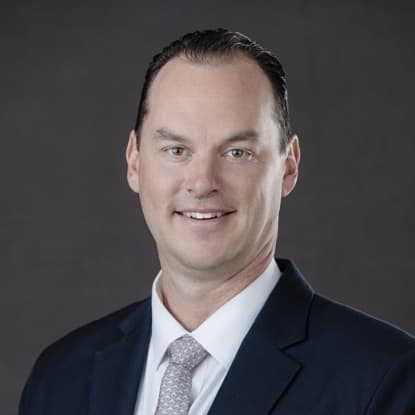
About Catherine Lerer
Catherine Lerer is a founding partner of McGee Lerer Ogrin, a California personal injury law firm. She has successfully settled more than 1,000 personal injury cases and has tried, arbitrated, and mediated hundreds more. Her practice covers personal injury law, car accidents, motorcycle accidents, bicycle and e-bike accidents, pedestrian accidents, premises liability, products liability, and sexual abuse cases.
Lerer is recognized nationally as a leading legal authority on e-scooter and e-bike accidents.
She earned her B.A. from UCLA and her Juris Doctor from Whittier College School of Law.
She is admitted to the California State Bar.
Lerer is a member of Consumer Attorneys of California (CAOC), the Consumer Attorneys Association of Los Angeles (CAALA), the American Association for Justice (AAJ), and is a lifetime member of the Multi-Million Dollar Advocates Forum.
She was named a Super Lawyer for 2025 and 2026.
Notable case results
McGee Lerer Ogrin represented 14 of the 124 survivors whose claims were resolved in a $122.5 million settlement with the City of Santa Monica over decades of child sexual abuse by a PAL volunteer the city failed to stop.
Catherine Lerer of McGee Lerer, co-counseling with Costell & Cornelius, filed a class action in October 2018 against Bird, Lime, Xiaomi, and Segway on behalf of riders and pedestrians seriously injured by dockless e-scooters deployed across Los Angeles.
In November 2019, a Los Angeles Superior Court judge overruled demurrers filed by Lyft and the City of Santa Monica, finding that an 88-year-old woman who sustained five pelvic fractures after tripping over a Lyft scooter in a posted no-deployment zone had stated viable negligence and public-nuisance claims against both defendants.
In a landmark April 2023 ruling, California's Second District Court of Appeal reversed dismissal of a pedestrian trip-and-fall lawsuit, holding that Bird Rides owes a general duty of ordinary care over its dock-less scooters and can be sued when improperly parked scooters injure members of the public.
Prior results do not guarantee a similar outcome. Each case is unique and depends on its own facts.