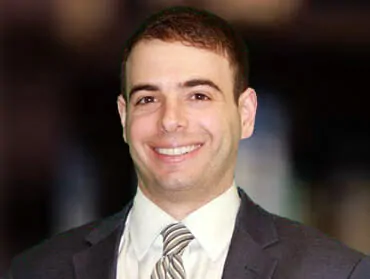
Nathan Murawsky
About Nathan Murawsky
Nathan Murawsky has represented injured individuals in personal injury matters for thirty years, handling cases involving medical malpractice, auto accidents, premises liability, liquor liability, defective products, and civil rights violations. He has tried dozens of cases to verdict in courts throughout Pennsylvania, New Jersey, and the U.S. District Court for the Eastern District of Pennsylvania, and has argued appeals before the Pennsylvania Supreme Court, Superior Court, the Third Circuit Court of Appeals, and the Fourth Circuit Court of Appeals. He obtained a unanimous decision from the Pennsylvania Supreme Court in Nicolaou v. Martin, where the Court overturned a dismissal based on the statute of limitations and held that a person's financial ability to obtain health coverage cannot be held against them. In Wise v. HACH, et al., he successfully argued to redefine immunities provided to the Commonwealth under the Tort Claims Immunity Act. The Philadelphia Court of Common Pleas has approved him to serve as a settlement master, presiding over settlement conferences for major cases. He earned his Bachelor's degree from Brandeis University in 1992 and his law degree from Villanova University School of Law in 1995, where he was a member of the Moot Court Board and recipient of the James J. Manderino Award for Trial Excellence. He served as Chair of the Trial Lawyers Section of the Montgomery Bar Association in 2024.
Notable case results
Multi-million dollar settlement for family of a 48-year-old woman who died in hospital after surgery due to unrecognized blood clot
Multi-million dollar settlement for a 40-year-old male who died of a heart attack after a cardiologist failed to take necessary action
Motor vehicle accident
For pedestrian struck in a parking lot by an inattentive driver
Pennsylvania Supreme Court unanimous decision in Nicolaou v. Martin, overturning dismissal on statute of limitations grounds in medical malpractice
Prior results do not guarantee a similar outcome. Each case is unique and depends on its own facts.