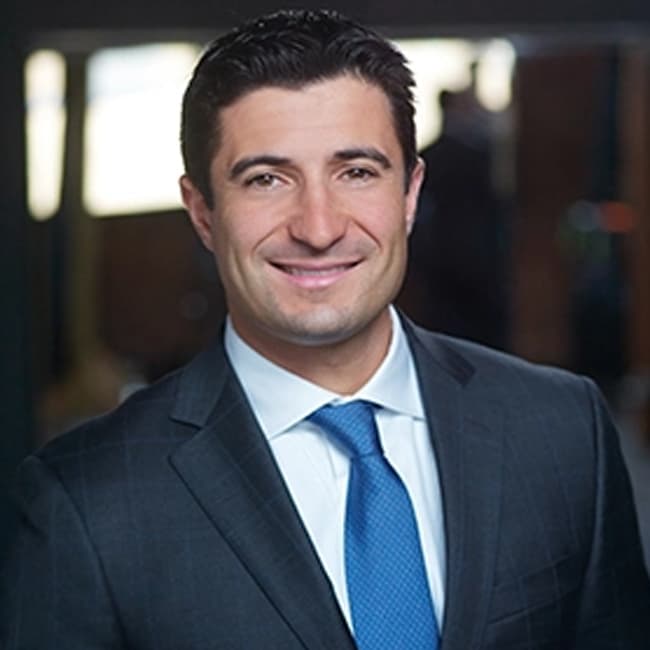
Martin Gould
About Martin Gould
Martin D. Gould is a trial attorney representing individuals and classes of victims in wrongful death, toxic exposure, medical malpractice, nursing home negligence, auto and trucking accidents, construction and other workplace accidents, sexual abuse including clergy and Boy Scouts cases, and product defect litigation including Zantac, Roundup/Monsanto, talc, and ethylene oxide matters. He has secured numerous record-breaking multi-million dollar verdicts and settlements. In 2017 he played a key role in obtaining a $44.7 million verdict at trial against the City of Chicago in a police misconduct case involving an off-duty officer who shot a construction worker in the head, causing paralysis, which was the largest such verdict in Illinois history. In 2019, his team obtained a $21.337 million verdict for the family of a mother of five killed in a car accident, and a $12.35 million settlement in a breast cancer misdiagnosis case, reported as the largest medical malpractice misdiagnosis settlement ever recorded in Illinois. He is licensed to practice in Illinois, Wisconsin, New York, Florida, Louisiana, New Jersey, Utah, Minnesota, Indiana, Nebraska, and the Seventh Circuit Court of Appeals. He graduated cum laude from Chicago-Kent College of Law with a J.D. and holds a B.A. in Political Science from Northwestern University. He is a member of the Illinois Trial Lawyers Association, the Chicago Bar Association, the American Association for Justice, and Public Justice.
Notable case results
Against the City of Chicago in a police misconduct case involving an off-duty officer who shot a construction worker, causing paralysis (largest such verdict in Illinois history)
For the family of a mother of five children killed in a car accident
In a breast cancer misdiagnosis medical malpractice case (largest reported in Illinois for that claim type)
For a 7-year-old sexually abused by a Church camp counselor
In a school bullying case, largest such verdict reported in Illinois
Prior results do not guarantee a similar outcome. Each case is unique and depends on its own facts.